



You Are the Salt of the Earth—But What Does That Mean? truthsum.org
 Ryan Welsh
8 months ago in Human Beings
Ryan Welsh
8 months ago in Human Beings
Jesus told His disciples, “You are the salt of the earth.” But what did He mean? Scripture frequently uses physical things to communicate spiritual truths. God’s Word is compared to food, providing the spiritual nourishment we need. So when Jesus calls His followers “salt,” He is giving us another picture of our responsibility toward that Word and toward the people around us. Salt enhances. Properly…

Are We Asking the Wrong Question? truthsum.org
Ryan Welsh
8 months ago in Human Beings
“Can a Christian get a tattoo?” Few questions generate more debate among Christians. Some point to Leviticus 19:28, while others argue Christians are no longer under the Old Testament law. The discussion often becomes a debate over permission rather than a pursuit of wisdom. Perhaps that’s because the question itself is too small. Questions shape the way we think. When we ask, “Can I?” we’re…

Money and Marriage: 7 Cs for Reducing Financial Friction – Becky Bennett lifehopeandtruth.com
Ryan Welsh
8 months ago in Human Beings
Money is one of the most common sources of tension in marriage. Because spouses share financial responsibilities, dishonesty about spending, debt, or savings can damage trust so deeply that it’s often called *financial infidelity*. Even when deception isn’t involved, financial disagreements can lead to stress, resentment, and conflict. The good news is that financial harmony is possible when couples choose to work together instead of…

Ecclesiastes in the age of the toaster – Jeremy Lallier sabbaththoughts.com
Ryan Welsh
8 months ago in Human Beings
Being a king once meant having access to whatever you wanted—if it existed. That’s what makes the words of the Preacher in Ecclesiastes so remarkable: “Whatever my eyes desired I did not keep from them. I did not withhold my heart from any pleasure.” (Ecclesiastes 2:10) Yet in many ways, we enjoy luxuries that even the greatest kings never knew. We can travel across continents…

When Leadership Fails – What Actually Keeps Us Steady truthsum.org
Ryan Welsh
8 months ago in Human Beings
When things go wrong, the instinct is to look upward – toward leadership or systems – for a solution. A new leader, a better structure, a different approach. And while leadership does matter, history shows that even the best systems eventually decline. Stability comes… and then it fades. Why? Because the issue often runs deeper than who is in charge. There’s a pattern repeated across…
The Thief on the Cross: A Forward Look into God’s Plan truthsum.org
Ryan Welsh
8 months ago in Human Beings
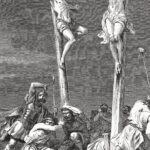
The thief on the cross is often used as proof of last-minute salvation – a simple confession followed by immediate entry into heaven. But this common reading relies heavily on modern assumptions about words like “salvation,” “heaven,” and “judgment,” rather than the broader biblical framework. When the account is read forward – through death (described as sleep), resurrection, Christ’s return, the Millennium, and final judgment…

Out of Egypt Again: The Spiritual Pattern of Escape truthsum.org
Ryan Welsh
8 months ago in Human Beings
Every spring, kitchens around the world undergo a curious transformation. Bread is discarded, crumbs are hunted, and leaven is removed – not for cleanliness, but for meaning. The Days of Unleavened Bread are a week-long reminder that leaving sin is not a moment, but a process. Israel left Egypt in a night, but Egypt did not leave them as quickly. In the same way, repentance…
Keeping the Passover and Days of Unleavened Bread truthsum.org
Ryan Welsh
8 months ago in Human Beings
As Passover approaches each spring, it brings more than seasonal change – it stirs a deeper anticipation tied to God’s Holy Days. I remember that sense of build-up as a child: messages each Sabbath, the house being carefully cleaned, and the search for leaven in even the smallest places. Those moments weren’t just routine – they were shaping something lasting. Today, my wife and I…

What Will Happen When You Die? – Stuart Wachowicz tomorrowsworld.org
Ryan Welsh
8 months ago in Human Beings
Since the beginning of human history, mankind has wrestled with the question of what happens after death. Is death the end of existence, or does some conscious part of a person continue living? Across cultures and civilizations, people have developed many different answers. Ancient societies often believed that a spiritual part of a person survived death. The Egyptians, for example, believed each person possessed multiple…

A Call to Repentance cbcg.org
Ryan Welsh
8 months ago in Human Beings
The death of Jesus Christ stands as both a witness to the world and a powerful call to repentance. From the beginning of His ministry, Jesus proclaimed, “Repent, and believe in the gospel,” making repentance the foundation of salvation. He declared that unless people repent, they will perish, emphasizing that all stand equally guilty before God. Scripture defines sin as lawlessness, and all humanity—except Christ—has…

Why I Dress Up for Church Service truthsum.org
Ryan Welsh
8 months ago in Human Beings
Most of us have heard the phrase, “God doesn’t care what you wear.” In one sense, that’s absolutely true. Scripture makes it clear that God looks at the heart, not outward appearance. Faith is not measured by fabric, and righteousness is not stitched into a suit jacket or pressed into a dress shirt. So why, then, do some people still choose to dress intentionally for…

Is the Kingdom of God Within You? – Richard T. Ritenbaugh cgg.org
Ryan Welsh
8 months ago in Human Beings
The Bible describes a kingdom as a real government ruled by a king over a defined people and territory. Yet many churches spiritualize the Kingdom of God, interpreting Jesus’ words in Luke 17:21—“the kingdom of God is within you”—to mean it exists inside believers. A closer look at context and language reveals a very different meaning. The Greek word translated “within” can also mean “among.”…

Living Your Best Life – Jeremy Lallier sabbaththoughts.com
Ryan Welsh
8 months ago in Human Beings
“Living your best life” is a popular phrase, but what does it truly mean? Many define it as maximizing happiness, comfort, and success. Yet Scripture challenges that assumption. The Bible repeatedly shows that blessing and ease are not the same. James writes, “Blessed is the man who remains steadfast under trial,” and Paul reminds us that “all who desire to live godly in Christ Jesus…

Lent: Scripture, Tradition, and the Question of Origins truthsum.org
Ryan Welsh
8 months ago in Human Beings
Discussions surrounding Lent often fall into two extremes. Many Christians assume that if a practice is ancient, widespread, and symbolically Christian, it must therefore be biblical. Others respond with sharp accusations, equating Lent with ancient pagan rituals and claiming participants are unknowingly “weeping for Tammuz.” Both approaches tend to shut down thoughtful examination rather than encourage it. A more careful approach distinguishes sincere modern devotion…

Three Choices: Good, Evil, & Life – Bill Hutchison leadingtolife.org
Ryan Welsh
8 months ago in Human Beings
Stephen Covey observed that what distinguishes humans is our ability to step outside our emotions, thoughts, and instincts to evaluate and choose our response. This self-awareness allows us to act intentionally rather than reactively. Yet, despite this ability, many people allow feelings, conditioning, and impulse to define their actions, bypassing thoughtful reflection. Scripture highlights that a critical moment exists between experience and response – a space…
Is Lent in the Bible? – Isaac Khalil lifehopeandtruth.com
Ryan Welsh
8 months ago in Human Beings
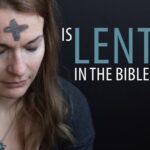
Lent is a 40-day period observed by some Christian denominations before Easter, involving fasting, prayer, and acts of repentance. While commonly associated with Catholicism, it is also practiced in various forms by Orthodox, Anglican, Lutheran, Methodist, and some Presbyterian churches. Despite its widespread observance, Lent is not mentioned anywhere in the Bible. Historically, early Christians did not observe a 40-day fast. Prior to the fourth…

From Transaction to Transformation: How Scripture Frames Law, Grace, Faith, and Salvation truthsum.org
Ryan Welsh
8 months ago in Human Beings
Much of modern Christianity operates within a transactional framework—one that views salvation primarily as a legal exchange. Humanity stands guilty before God, Jesus pays the penalty, and believers are declared righteous in a courtroom sense. While this model contains biblical elements, it often reduces the gospel to legal status and escape from judgment. Scripture presents a deeper and more relational vision. The gospel is not…
Article 4 – Acts 15: The Council That Redefined the People of God truthsum.org
Ryan Welsh
8 months ago in Human Beings
Acts 15 records a decisive moment in the early Church—not because doctrine changed, but because God’s actions forced clarity. The Jerusalem Council was not debating abstract theories of salvation. The question was far more concrete: Must Gentiles take on Jewish covenant identity in order to belong to the Spirit-filled people of God? Within first-century Judaism, belonging followed clear categories. Jews were born into the covenant….

The Wedge of Social Media: Formation, Humility, and the Test of Community truthsum.org
Ryan Welsh
8 months ago in Human Beings
Social media offers unprecedented access to ideas and communities, but it also exposes the cracks in our formation. Every belief finds reinforcement, every doubt an echo, every opinion a following. Children grow up immersed in this environment, and adults are not immune. Families strain, and even churches feel the pull. What matters most is not how loudly something is said, but what kind of foundation…

Article 3: The Spirit as the Beginning of Salvation — Why Circumcision Was Never the Gateway truthsum.org
Ryan Welsh
8 months ago in Human Beings
Before continuing, it’s worth explaining the deliberate pace of this series. Many assumptions modern Christians bring to Paul’s letters were not formed directly from Scripture, but from generations of layered explanations, inherited frameworks, and well-intentioned yet flawed teaching. Over time, these ideas shape how the text is read automatically, often without being questioned. What should be a fairly understandable subject has been made unnecessarily complex….