Article 4 – Acts 15: The Council That Redefined the People of God

Few passages in Scripture display the tension, beauty, and unfolding revelation of God’s plan quite like Acts 15. For that reason, this article functions as the crux of this series. The Jerusalem Council wasn’t merely an administrative meeting; it was the moment the early Church had to confront its deepest assumptions about identity, belonging, and the work of the Holy Spirit. It forced the apostles and elders to wrestle with a question that had shaped Jewish life for centuries: What does it mean to be part of the people of God?
And surprisingly, the debate wasn’t centered on “what must someone do to be saved?” but rather, “What must someone do to share life with God’s people and receive the Spirit?”
To understand what’s happening, we must begin with the world behind the text—the complex social and religious landscape of first-century Judaism, where ideas about salvation, holiness, ethnicity, purity, and covenant identity collided.
The Social Dynamics Behind the Council
A World of Categories: Jews, Proselytes & God-Fearers
Before Acts 15, there were established categories of people who “drew near” to Israel’s God:
- Jews – Born into the covenant, circumcised, Torah-keeping, ritually clean.
- Proselytes – Gentiles who fully converted to Judaism, including circumcision. They became legally Jewish.
- God-Fearers – Gentiles who admired Israel’s God, attended synagogue, supported Jewish causes, kept some Torah, but stopped short of conversion.
These categories created a hierarchical experience of belonging — degrees of nearness to the covenant, the community, and the temple.
This matters because the early Christian movement emerged inside Judaism. The first believers saw Jesus not as the founder of a new religion, but as the long-promised Jewish Messiah who was fulfilling Israel’s story. So when Gentiles began responding to the gospel, the natural assumption for many Jewish believers was:
If Gentiles are joining the Messianic movement, they must become Jews.
That means circumcision.
This was not seen as adding “works to salvation.” It was understood as the pathway into the covenant people. This was understood as the same pathway God had given Abraham.
Thus, when Acts 15 opens, the demand from certain believers is not surprising:
“Unless you are circumcised according to the custom of Moses, you cannot be saved.”
—Acts 15:1
But again — this is not modern evangelical “salvation” as has been discussed in previous articles.
“Saved” for them meant belonging to the covenant family and thereby sharing in the blessings of Messiah.
The Crisis: The Spirit Won’t Follow the Old Categories
The real problem wasn’t what some believers were teaching —
the problem was what God had already done.
The Holy Spirit had been poured out on uncircumcised Gentiles (Acts 10).
No categories.
No prerequisites.
No conversion to Judaism.
And this was unthinkable in Jewish imagination.
A Gentile might worship Israel’s God.
A Gentile might attend synagogue.
A Gentile might even be more righteous than many Jews.
But the Spirit — the marker of the new age, the down payment of the Kingdom — was only for the covenant people.
So when God gave the Spirit to Gentiles who had zero intention of becoming Jews in this traditional sense, everything broke.
This is why Peter tells the council:
“God made no distinction between us and them, giving them the Holy Spirit just as He did to us.”
—Acts 15:8–9
The giving of the Spirit ignored the hierarchy.
The giving of the Spirit ignored the categories.
The giving of the Spirit ignored conversion.
The giving of the Spirit even ignored circumcision.
God’s actions forced the Church to confront the question:
If God has already declared Gentiles to be part of His family, who are we to add requirements He did not?
The Four Prohibitions: Drawn from God’s Law, Not a New Requirement
When James speaks at the council, he is not proposing a new rule set, nor is he negotiating a middle ground between Jewish and Gentile believers. His judgment is rooted in God’s existing instructions and in the evidence of what God Himself had already done.
“We should not trouble those of the Gentiles who are turning to God.”
—Acts 15:19
Rather than requiring circumcision or full covenant identity conversion, James identifies four prohibitions:
- Things polluted by idols
- Sexual immorality
- Things strangled
- Blood
(Acts 15:20, 29)
These instructions were not a new law, nor a reduced version of the Torah. They were well-established commands already present in God’s Law, specifically associated with foreigners who joined themselves to Israel and entered Israel’s assembly.
Where These Four Prohibitions Come From
Each of these commands has clear roots in the Law:
- Idolatry — forbidden to both Israelite and foreigner alike (Exod. 20:3–5; Lev. 17:7–9).
- Sexual immorality — explicitly applied to the sojourner living among Israel (Lev. 18:24–30).
- Blood and strangled animals — dietary restrictions given to all who dwell among Israel (Lev. 17:10–14).
These were not random selections. They reflect longstanding expectations for Gentiles who turned to Israel’s God, especially those participating in communal worship and daily life.
Why These Commands Were Emphasized
James’ concern was practical and relational, not salvific.
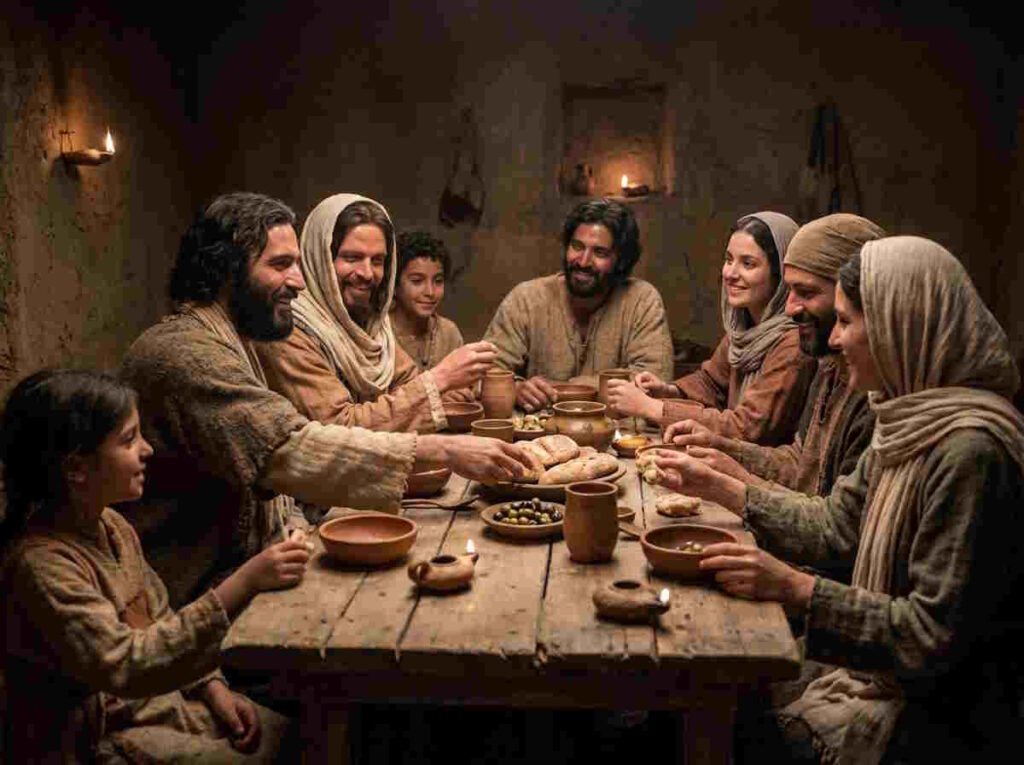
- Shared table fellowship
Jewish and Gentile believers needed to eat together in the same homes and congregations. - Synagogue life
These practices were among the most offensive to Jews and would immediately fracture unity. - Established biblical precedent
The Law already distinguished between covenant identity and participation within the community. - Unity without identity conversion
The goal was peaceful life together, not redefining salvation.
James makes this explicit:
“For Moses has had in every city those who preach him, being read in the synagogues every Sabbath.”
—Acts 15:21
In other words, the Torah was already known, taught, and respected. These four commands provided a shared moral and communal foundation that allowed Jewish and Gentile believers to live and worship together without constant offense or division.
The Point Was Unity — Not Status
James does not treat these instructions as gateways to salvation or conditions for receiving God’s Spirit. They were instructions for life within the community, drawn directly from God’s Law and applied consistently with how Gentiles had always been welcomed among God’s people.
The issue was never obedience versus grace.
It was identity markers versus God’s direct action.
What the Council Was — and Was Not — Deciding
At the Jerusalem Council, the apostles were not debating competing theories of salvation, nor were they redefining the role of God’s law. The issue before them was far more specific:
Must Gentiles take on Jewish covenant identity in order to belong to the Spirit-filled community God was forming?
Everything in Acts 15 turns on that single question.
What the Council Was Not Addressing
The council did not attempt to define:
- the full process of salvation
- how final judgment works
- the ongoing role of Torah in a believer’s life
- whether obedience matters
- whether Jews should continue living according to the Law
- a balance between “grace and law” as abstract concepts
Those later theological categories are simply not the subject of the discussion.
What the Council Did Decide
The apostles focused narrowly on entrance into the covenant community where God’s Spirit was already at work — not the end of salvation, but its beginning.
And on that point, their conclusion was unmistakable:
- God Himself gives the Spirit.
- God Himself determines who belongs to His family.
- No identity marker can add to what God has already done.
Circumcision was therefore not rejected as sinful or meaningless. It was rejected as a gateway.
This is why Peter warns:
“Why do you test God by putting a yoke on the neck of the disciples which neither our fathers nor we were able to bear?”
—Acts 15:10
The burden was not the Law itself.
The burden was treating covenant identity as the mechanism by which God grants His Spirit.
The Clarifying Point
Acts 15 does not present salvation as a transaction, nor does it dismantle God’s instruction. It establishes order:
God acts first.
God gives His Spirit first.
Everything else follows within that relationship.
This distinction is essential — because once the starting point is misunderstood, everything downstream becomes confused.
The Council’s Defining Revelation: Identity Begins with God’s Call

Acts 15 reveals a foundational truth the early Church could not ignore:
God makes the first move.
God gives His Spirit first.
God’s calling creates identity.
Gentiles were not merely relieved of a requirement for circumcision; more fundamentally, circumcision was never the means by which they were brought into God’s family at all. They belonged because God had already placed His Spirit upon them.
This forced the Church to confront a difficult reality:
theology had to adjust to God’s actions, not the other way around.
The Spirit did not follow conversion rituals.
The Spirit did not wait for identity markers.
The Spirit marked belonging before transformation was complete.
Acts 15 does not teach “belonging without obedience,” nor does it undermine God’s instruction. Instead, it restores the proper order:
- Calling precedes conformity
- Relationship precedes regulation
- Identity precedes maturation
The issue was never obedience versus grace.
It was never law versus faith.
It was whether human-defined gateways could stand where God had already acted.
Why Acts 15 Still Confronts the Church Today
Acts 15 is not an ancient argument about circumcision.
It is a permanent warning about gatekeeping.
It asks every generation of believers the same questions:
- Do we recognize God’s work when it doesn’t fit our categories?
- Do we require cultural alignment before we acknowledge spiritual reality?
- Do we place expectations where God has already extended grace?
The Jerusalem Council did not redefine the gospel.
They surrendered to it.
And their conclusion still stands:
Where God has placed His Spirit, do not build walls.