The Gospel Jesus Preached: Rediscovering the Good News of the Coming Kingdom

What if the gospel is bigger than you were ever told?
What if forgiveness of sins is not the destination, but the doorway?
And what if Jesus’ primary message was not simply about personal salvation, but about the restoration of God’s rule over the earth?
Christianity speaks often about the cross, about forgiveness, and about salvation—and rightly so. These truths are essential. But it speaks far less about the subject that dominated Jesus’ own teaching.
From His first recorded sermon to His final conversations with the disciples, Jesus proclaimed one central message: the Kingdom of God is coming. The word gospel appears dozens of times in the New Testament, yet the central subject of that gospel is rarely discussed. Jesus did not travel from town to town preaching about going to heaven when you die. He preached about a Kingdom — a real, coming Kingdom that would rule the earth.
Jesus also warned that false gospels would be proclaimed in His name. Not gospels that openly deny Him, but messages that sound Christian, use His name, and yet subtly distort His message.
That warning forces an important question: how would we know the difference?
The answer is simple, but often overlooked — we must compare what is preached today with what Jesus Himself called “the gospel.”
What Most Christians Mean by “the Gospel”
Most Christians, when they speak of the gospel, are not attempting to distort Jesus’ message. In sincerity and faith, they understand the gospel to be the good news that Jesus Christ came to earth, lived a sinless life, died for the forgiveness of sins, and rose again so that those who believe in Him may be saved. This understanding rightly emphasizes the cross — i.e. His sacrifice, the grace of God, and the necessity of faith in Christ.
Without His sacrifice, there would be no reconciliation with God and no hope of eternal life. These truths are not in question.
Yet while all of this is true, it leaves an important question unanswered. If the gospel is simply the message of Christ’s death and resurrection, why did Jesus spend His ministry proclaiming something else? Why do the Gospels repeatedly record Him preaching about the Kingdom of God, while rarely explaining the meaning of His sacrifice until the very end?
The answer lies in a distinction often overlooked — the difference between the means of salvation and the message Jesus proclaimed.
The Gradual Shift in How the Gospel Was Understood
The New Testament itself warns that changes in emphasis would occur after Christ’s death and resurrection. The apostles cautioned that distortions of the gospel would arise and not always through open denial, but through subtle shifts in focus (Acts 20:29–30; Galatians 1:6–7).
As the early Church moved further from its biblical roots and into the Greco-Roman world, the Kingdom-centered message Jesus proclaimed began to fade from prominence. In its place, the gospel increasingly came to be framed primarily as a message about Christ rather than the message Christ preached. Over time, the hope of a literal, coming Kingdom of God on earth was replaced with philosophical ideas about the soul, heaven, and the afterlife — concepts far more familiar to Greek thought than to the Hebrew Scriptures.
This shift did not require rejecting Christ. His name, His sacrifice, and His resurrection remained central. But the forward-looking proclamation of God’s coming government slowly receded into the background. As Christianity became increasingly institutionalized, the gospel was largely reduced to a message of personal salvation detached from the Kingdom it was meant to prepare people to inherit.
To recover the true gospel, we must set aside later assumptions and return to the source — not to church tradition, but to the words of Jesus Himself.
The Gospel According to Jesus
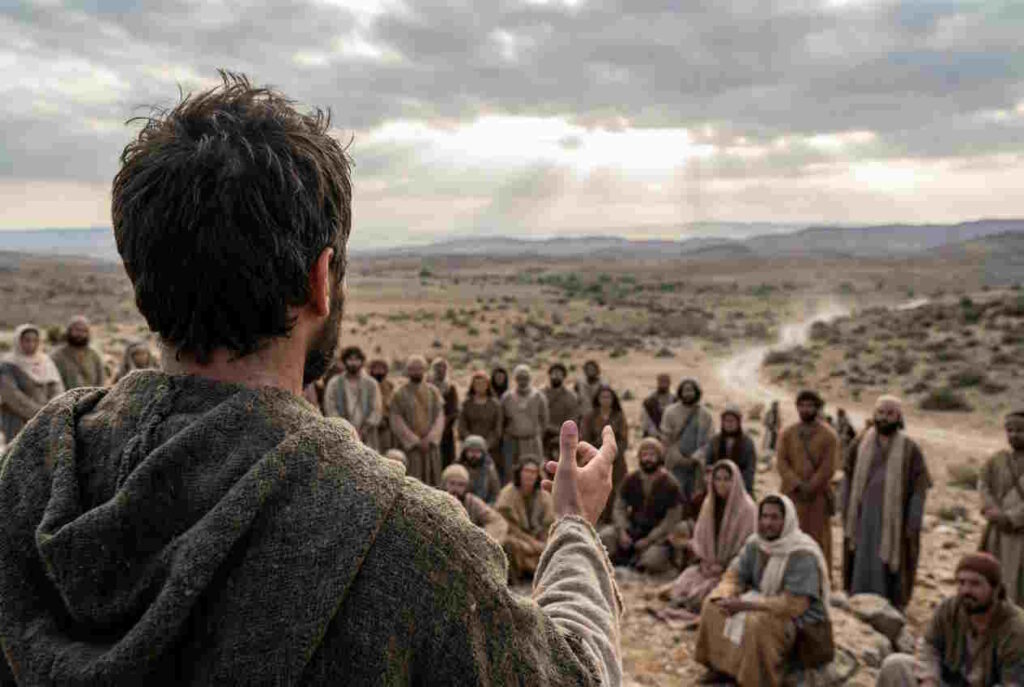
From the beginning of His ministry, Jesus proclaimed the gospel as an announcement of a coming Kingdom. Mark records His opening declaration: “The time is fulfilled, and the kingdom of God is at hand. Repent, and believe in the gospel” (Mark 1:14–15). The gospel Jesus preached was inseparably tied to the Kingdom of God.
Luke describes Jesus traveling from city to city “preaching and bringing the glad tidings of the kingdom of God” (Luke 8:1). When people tried to keep Him in one place, Jesus explained His mission plainly: “I must preach the kingdom of God to the other cities also, because for this purpose I have been sent” (Luke 4:43).
Throughout His ministry, Jesus taught in parables used in part to explain the nature of that Kingdom — how it would begin, how it would grow, who would inherit it, and how its citizens must live in preparation for it. He spoke of authority, stewardship, judgment, and reward. These were concepts that only make sense within the framework of a real government yet to be established. He even taught His disciples to pray, “Your kingdom come” (Matthew 6:10).
While Jesus foretold His suffering to His disciples, the meaning of His sacrifice was not fully explained until after His resurrection. This does not diminish His sacrifice; it places it in its proper role. Christ’s death and resurrection made entry into the Kingdom possible, but they were not the totality of the gospel He proclaimed.
After His resurrection, Jesus continued teaching the same message. Acts records that He spent forty days speaking to His disciples “of the things pertaining to the kingdom of God” (Acts 1:3). The gospel according to Jesus was the good news that God’s rule would be established on the earth, replacing the kingdoms of men, and that those who repent, believe, and follow Him would be granted a place in that coming Kingdom.
The Kingdom Message in the Law, Prophets, and Writings

Now contrary to modern assumptions Jesus did not introduce a new message when He proclaimed the Kingdom. He restored clarity to a message already embedded throughout the Hebrew Scriptures. The Law, the Prophets, and the Writings consistently point forward to a future age when God would establish His rule over the earth.
The covenants with Abraham and David, the promises delivered through the prophets, and the longings expressed in the Psalms all anticipate a time of restoration, peace, and righteous governance. The prophets spoke of nations learning righteousness, of war ceasing, and of the Messiah reigning over all the earth (Isaiah 2; Daniel 2; Zechariah 14). These are not abstractions, they describe a transformed world under God’s government.
Embedded within the Law itself is a recurring sign pointing directly to this future reality: the Sabbath.
The Sabbath and the Millennial Rest
The seventh-day Sabbath was established at creation, long before Israel existed (Genesis 2:1–3). God’s rest was not an act of fatigue, but a declaration of completion — a pattern set into time itself.
Scripture later reveals that this Sabbath rest points forward. Hebrews 4 explains that a future “rest” remains for the people of God, while Revelation identifies that period as the thousand-year reign of Christ. In this sense, the Sabbath functions as a weekly reminder of the coming Kingdom — a prophetic sign and reminder of the millennial rest under God’s rule.
As segments of the Church moved away from observing the Sabbath, the Kingdom framework it taught also faded. Perhaps some could argue that the loss of the Sabbath did not cause the loss of the gospel, but it did coincide with it. When the signs pointing to God’s future reign were set aside, the Kingdom they proclaimed gradually disappeared from Christian understanding.
The Holy Days and the Full Scope of God’s Plan
While the Sabbath reveals the destination of God’s plan, the annual holy days reveal the path by which He brings humanity there. Together they outline the full scope of the gospel.
Passover reveals Christ’s sacrifice. The Days of Unleavened Bread picture a transformed life. Pentecost reveals that God is calling firstfruits now. Trumpets announces Christ’s return. Atonement pictures the removal of Satan’s influence. The Feast of Tabernacles reveals the millennial Kingdom.
The final holy day reveals the second resurrection. The future time when those who lived and died without understanding the gospel will be raised, taught, and given a genuine opportunity to choose eternal life. This reveals a God who is just, merciful, and purposeful, working out salvation for all in their proper time.
A Call to Re-Examine the Gospel Jesus Preached

The purpose of examining the gospel is not to diminish sincere faith, but to ensure that the message we believe is the message Jesus proclaimed.
When Scripture is allowed to speak for itself, a consistent picture emerges. The gospel Jesus preached was the good news of the coming Kingdom of God. His sacrifice was essential — not as the end of the message, but as the means by which people can enter that Kingdom.
Jesus instructed His followers to seek first the Kingdom of God. That command still stands. The question is not whether Jesus is central to the gospel — He is. The question is whether the gospel we believe is the one He preached.