Lent: Scripture, Tradition, and the Question of Origins

Discussions surrounding Lent often fall into two extremes. On one side, many Christians assume it is a time-honored tradition tracing back to the time of Christ – widespread, holy, and symbolically Christian – and therefore biblical in origin. A forty-day fast leading up to Christ’s crucifixion and resurrection seems appropriate, spiritually meaningful, and rooted in devotion. Because it feels so deeply Christian, to question it can seem almost heretical.
On the other side, critics often respond with sharp accusations, sometimes equating modern observance of Lent with ancient pagan mourning rituals and even suggesting that participants are, at best, unknowingly “weeping for Tammuz.” While historical parallels do exist, this condemnatory framing frequently becomes more confrontational than constructive. Rather than encouraging thoughtful examination, it can function as a rhetorical club – leveraging shame and guilt to force agreement instead of inviting understanding. In doing so, historical influence becomes personal accusation, and institutional development is reduced to individual blame. Unsurprisingly, this approach rarely works and is often dismissed by those who are already deeply invested in the tradition.
Both approaches ultimately shut down thoughtful discussion rather than encourage it.
A more thoughtful look invites a different approach – one that separates sincere modern devotion from the historical development of religious practices. It doesn’t assume that ancient tradition is automatically biblical, and it doesn’t treat every historical connection as an accusation of pagan worship. Instead, let’s simply ask honest questions: Where did Lent come from? How did it develop? And how does that history compare with the biblical model of worship?
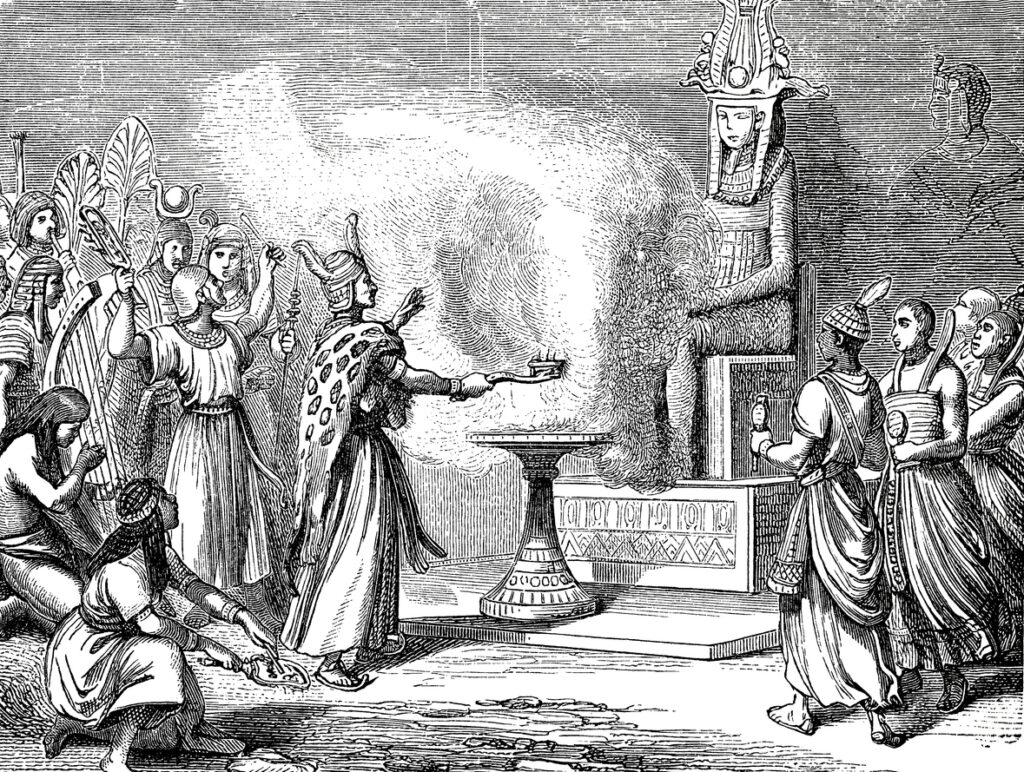
The comparison to Tammuz arises from a striking passage in Ezekiel, where the prophet is shown women weeping for a pagan deity within the precincts of God’s own temple. Tammuz was a Mesopotamian fertility god associated with agricultural cycles of death and rebirth. His worship included ritual lamentation, fasting, and seasonal mourning – practices tied to the annual dying of vegetation and the hope of its return. These rituals symbolized the temporary triumph of death and the expectation of renewed life.
This connection has led some critics to equate Lent directly with Tammuz worship. Yet such a conclusion oversimplifies both history and theology. While the comparison has substance, it becomes misleading when used as a blunt accusation rather than as a historical observation. Perhaps the value lies not in equating modern believers with ancient idolaters, but in understanding how deeply these religious frameworks shaped the ancient world.
The religious system surrounding Tammuz did not disappear with the fall of Babylon. Instead, it migrated, adapted, and evolved across civilizations. In Phoenicia, Tammuz became Adonis. In Greece, similar myths emerged around Adonis and Dionysus. In Rome, these concepts appeared in the cults of Bacchus and Attis. While the names and details changed, the underlying theology remained remarkably consistent: a god who dies, is mourned, and is restored to life, reflected in seasonal fasting, ritual lamentation, purification ceremonies, and symbolic renewal.
These practices were not isolated or obscure. They formed part of a broad religious framework spanning centuries and empires. Seasonal purification fasts, mourning cycles, and initiation rituals were woven into the spiritual consciousness of the ancient Mediterranean world. By the time Christianity began spreading through the Roman Empire, these concepts were deeply familiar. Religious life was expected to include seasons of reflection, self-denial, mourning, and symbolic rebirth.

Understanding this broader religious environment is crucial, because it places the later development of Lent into historical context. Rather than emerging in a vacuum, Christian traditions took shape within a culture already structured around ritual fasting and seasonal observance. Historical evidence suggests that this process was often deliberate. Church leaders consciously adapted familiar pagan customs in an effort to ease conversion, unify diverse populations, and establish religious cohesion across the empire. Whether motivated primarily by pastoral concern, political necessity, or institutional ambition, the result was the gradual absorption of existing religious forms into Christian worship.
When we turn to early Christian history, one fact becomes immediately clear: Lent is entirely absent from Scripture. There is no command, example, or instruction establishing a forty-day pre-Easter fast. Jesus fasted for forty days, but Scripture never instructs believers to commemorate that fast annually. The apostles likewise left no record of observing or commanding such a practice.
Even in the earliest post-apostolic writings, Lent does not appear in any recognizable form. Early Christian communities did begin to practice fasting – though not commanded in Scripture, and likely motivated by sincere spiritual intent. Its duration and timing varied widely, and it was directly tied to Passover rather than to a symbolic pre-Easter season. Some fasted for a single day before Passover, others for two days, some for several days, and in certain regions, a fast of approximately forty hours was observed. This forty-hour period reflected the growing belief that Christ lay in the grave from Friday afternoon until Sunday morning, already departing from Jesus’ own statement that He would remain in the grave three days and three nights. These variations demonstrate not only the absence of any standardized fasting season, but also the early development of theological compression that would later shape broader liturgical traditions.
It is not until the fourth century, after Christianity gained imperial favor under Constantine, that we see the emergence of a formalized forty-day Lent. By this time, Christianity was no longer a persecuted minority but a rapidly expanding imperial religion absorbing millions of pagan converts. Church leadership faced the complex challenge of unifying diverse cultures under a single religious system. The standardization of worship, calendar, doctrine, and practice became a central concern.
This period also saw the institutionalization of many practices now regarded as ancient Christian tradition. December 25th emerged as the date of Christ’s birth. The timing of Easter shifted away from the biblical Passover framework. Sunday observance gradually replaced the biblical Sabbath. Saints replaced local deities as objects of devotion. Temple-style worship, incense, vestments, candles, and sacred spaces became central to Christian practice. In nearly every case, existing pagan religious forms were absorbed, reinterpreted, and given Christian meaning.
Lent fits naturally within this broader pattern.
Rather than arising from apostolic teaching, Lent appears historically as part of a developing religious calendar shaped by cultural expectation, institutional authority, and theological symbolism. The forty-day structure aligns not with any biblical command but with long-standing religious instincts toward seasonal purification and preparation. Its emergence during Christianity’s rapid expansion into pagan society suggests continuity of religious form rather than direct scriptural origin.
This historical perspective helps explain why Lent feels intuitively spiritual to many believers. The human impulse toward fasting, reflection, and preparation is deeply rooted, and Scripture itself encourages self-examination, repentance, and humility. The problem arises when such practices become institutionalized as religious obligations without clear biblical foundation.
Scripture already provides a divinely designed calendar that reveals God’s plan of salvation. The biblical festivals outline redemption, deliverance, sanctification, and restoration in a coherent theological framework. In particular, Passover and the Days of Unleavened Bread are intentionally designed as periods of deep reflection and self-examination, calling believers to examine their lives, repent sincerely, and consciously put sin away. Notably absent from that calendar, however, is any commanded pre-Passover fasting season. Christ Himself faithfully observed this calendar, yet never instituted a forty-day observance leading up to His sacrifice.
This raises a fundamental question – not about sincerity, but about authority.
Did Lent arise from biblical instruction, or from religious frameworks Christianity absorbed as it spread through the Roman world?

When tradition becomes assumed holiness, believers risk inheriting practices without ever testing them against the foundation of Scripture. At the same time, when historical influence becomes personal accusation, truth is often rejected before it can be thoughtfully considered. Both extremes hinder understanding.
A more careful approach recognizes that many who observe Lent do so with genuine desire for repentance, discipline, and spiritual growth. Scripture affirms those goals. Yet sincerity alone cannot establish biblical authority. Faithful worship requires not only devotion, but discernment.
Examining Lent’s origins is therefore not an exercise in condemnation, but in clarity. It invites believers to ask whether tradition has quietly replaced instruction, and whether inherited religious frameworks have shaped worship more than Scripture itself. Such questions do not undermine faith; they refine it.
The goal is not to dismantle devotion, but to root it more deeply in truth. When believers seek worship grounded in biblical authority rather than inherited custom, faith becomes not only sincere, but firmly aligned with God’s revealed instruction.